Esther Yi’s To God Treats Love as an Uncompromising Ideal
Story by Ashley Honeysett · 786 readers
In To God, Esther Yi’s strange, searching stories take love seriously, even as their dreamlike turns and uneven prose can test a reader’s patience.
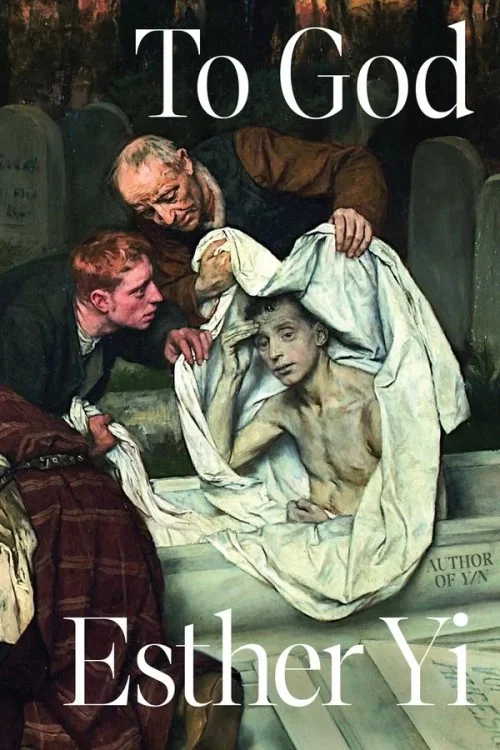
Esther Yi’s To God asks its characters to treat love as a life’s work: something pursued with total devotion, even when the beloved is awkward, disappointing or difficult to understand. That premise gives the collection its force and its friction. Yi’s stories make love feel as strange and intellectually demanding as any other grand idea, though their fantastical turns and uneven sentences sometimes weaken the spell.
The narrators aren’t looking for the moderate, mutually comfortable affection that fiction often presents as an ideal. In “Centripetal,” one woman longs to love a single person “unconditionally and indefatigably, like a machine.” If that love fades, she says, the failure would mean she was “not nonhuman enough.” Her imagined standard makes ordinary human limitations sound like a moral shortcoming. It’s an arresting way to introduce a collection in which devotion can become an obsession, and vulnerability often begins with recognizing how little control a person has over the one they love.
That same story complicates the narrator’s ideal when she finally meets the man she believes she is destined to love. He looks worse than she expected, and that very imperfection moves her: she likes knowing precisely how he fails to look good. He, meanwhile, calls her love frightening. “What else would it be?” she asks. The exchange captures Yi’s unsettling comic touch. The lovers aren’t made more compelling by being polished or exemplary; their shortcomings give the narrator something particular to cherish. But the question remains: can a love that demands everything from its subject still make room for that person to be fully themselves?
The collection returns to that problem across different relationships. Its emotional attention extends beyond couples to parents, children and friends. In No Right Hand, a line describes friendship as a shared effort to think more clearly: “Aren’t we trying to think better together?” It’s a small, lovely definition of intimacy, and one of the book’s clearest statements of what people might give each other besides passion. Yi takes the ethics of attachment seriously. In these stories, how people love is bound up with how they understand the value of a life.
Dream logic, with a cost
To give that intensity room, Yi places the stories in realities that don’t follow everyday rules. In “Ultramontane,” the narrator’s pores open visibly to drink rain. The collection’s impossible details make emotional excess part of the setting: these aren’t ordinary lives in which love happens to feel unusually strong. The world itself seems bent to accommodate the characters’ demands.
That approach will suit readers who enjoy fiction that runs on dream logic, but it sometimes left me fatigued. I found myself returning to H.G. Wells’s observation, “Nothing remains interesting, where anything may happen.” When a character finds or loses the person they need, or encounters a place transformed, the event can feel less like the result of what came before than a turn in a dream. That freedom offers surprise, yet it can also make cause and effect feel thin. For me, the friction grows when the prose falters, since a reader already working to understand a strange world has less patience for an awkward sentence.
“White Anton” shows the problem in miniature. A woman’s sparring partner at a boxing gym tells her he dreamed about her. She replies, “The dream’s content must’ve been of an intimacy we lacked in reality.” The thought is intriguing: imagination supplies closeness the characters don’t share. But the wording feels stiff, and similar constructions recur. The characters hold themselves to extreme ideals; the sentences don’t always show the same precision. That gap is especially noticeable in a book so invested in the exact terms of love and connection.
A familiar subject in a new form
To God follows Yi’s debut novel, Y/N, which also explored obsessive love. There, an intensely devoted fan searches for a K-Pop idol after he disappears from public life. The novel’s premise gave Yi space to sustain that fixation across a longer narrative, and I found its commitment exhilarating. The stories in To God are briefer, so their recurring questions don’t build toward the same extended satisfaction. Their insistence has its own appeal, but readers who loved the novel’s sustained arc may want more development from individual stories.
The collection’s fantastical method also brought Jorge Luis Borges to mind. Yi doesn’t take up the subjects associated with the Borges comparison here; instead, she gives love a similarly serious place in the imaginative structure of her fiction. That choice is the book’s most rewarding ambition. Love is not a decorative theme or a source of plot alone. It becomes a way to examine what people owe one another, what they can bear to give, and whether devotion can ever be separated from the self who offers it.
Not every story reaches the heights of that inquiry, and the collection’s unusual rules can wear on the reader. Still, Yi’s subject is clear and worth following: love as an ideal that asks to be tested against actual, imperfect people. To God is best suited to readers who welcome speculative fiction with an emotional and philosophical center, and who don’t mind a book that sometimes makes its ideas more compelling than its sentences.
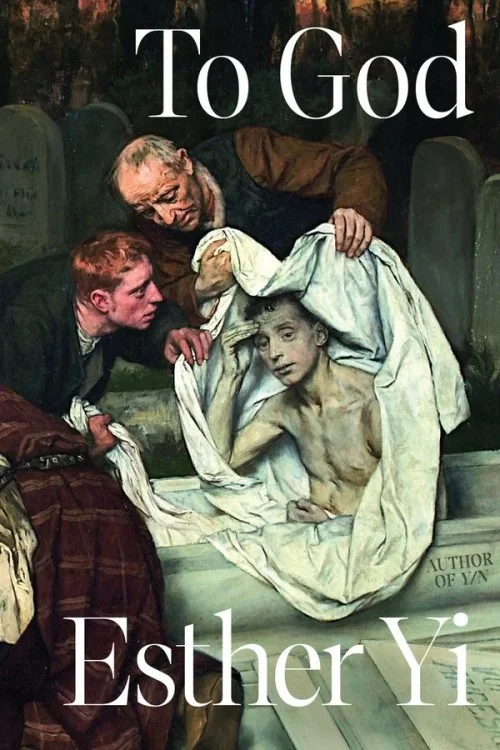
FICTION
By Esther Yi
Astra House
Published October 13, 2026