Hans Zimmer’s Dune: Part Three Score Will Mostly Introduce New Music
Story by Josip Kraljik · 792 readers
Hans Zimmer says Dune: Part Three will build a fresh score for Paul’s darker chapter, with brief musical callbacks linking it to the earlier films.
Hans Zimmer is giving Dune: Part Three its own musical identity. Most of the score will be new, he told The Hollywood Reporter, while small pieces of themes from the first two films will return to connect Denis Villeneuve’s trilogy. That balance points toward a finale that recognizes the sound audiences already know while making room for a very different stage of Paul Atreides’ story.
There’s already one early hint of the music to come. WaterTower Music released “Desert Chant” in October, performed by Timothée Chalamet and Zimmer. The track begins with Chalamet humming, then grows into a war chant. It offers a taste of the film’s sound, though Zimmer’s comments suggest that a single released track can’t stand in for a score built largely from new material.
The earlier films established an unmistakable musical vocabulary: booming chants, electronic textures and invented vocal styles that helped give Arrakis a sound as distinctive as its vast desert imagery. Repeating that vocabulary throughout the third film might make the story feel musically familiar. Zimmer’s plan instead leaves the score room to change with Paul, whose position in the story has shifted from a young man’s struggle for power to the burdens of an emperor’s reign.
A new chapter for Paul and Chani
Dune: Part Three adapts Dune Messiah, Frank Herbert’s second novel in the series. The story takes place around 17 years after Dune: Part Two. Paul is now a ruthless emperor, facing the consequences of his rule and visions of the Imperium’s collapse. He is also drawn into a conspiracy centered on Chani.
That change in circumstance gives Zimmer’s fresh score a clear dramatic purpose. The film’s musical world can evolve alongside a protagonist who has reached the height of power but faces mounting danger and personal uncertainty. Brief returns of earlier themes may carry particular weight in that setting: a familiar phrase can recall the person Paul was, or the path that brought him here, while new music reflects what has changed. That’s a reading of the approach Zimmer described, rather than a claim about where any particular theme will appear.
Chalamet returns as Paul, with Zendaya as Chani. The returning cast also includes Florence Pugh as Irulan, Javier Bardem as Stilgar, Josh Brolin as Gurney Halleck and Charlotte Rampling as Reverend Mother Mohiam. Rebecca Ferguson appears as Lady Jessica in a single scene.
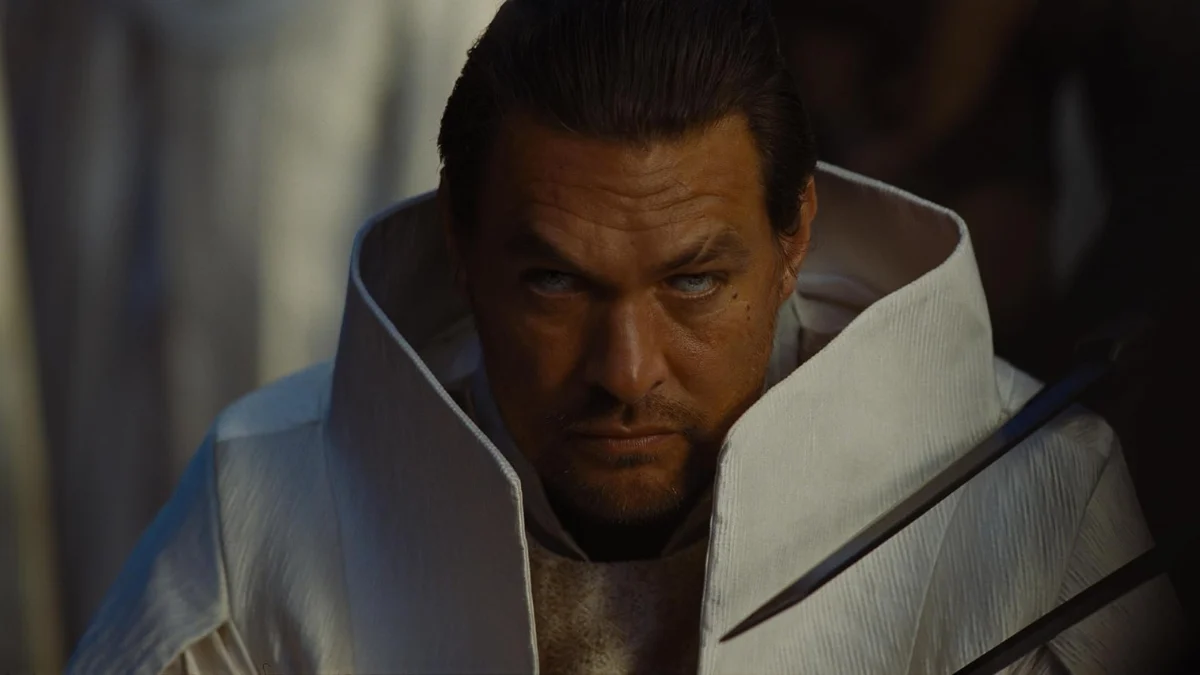
Several other cast members connect the story to the Atreides family and its wider world. Jason Momoa returns as Hayt, a ghola created in the image of Duncan Idaho. Anya Taylor-Joy plays Alia Atreides, and Robert Pattinson joins as Scytale, a Tleilaxu Face Dancer plotting against Paul. Nakoa-Wolf Momoa and Ida Brooke play Leto II and Ghanima, the twin children of Paul and Chani. Isaach de Bankolé joins as Farok.
A score made for the scale of the film
The production has also made substantial use of large-format film. Principal photography began in July 2025 at Origo Film Studios in Budapest, followed by desert shoots at Liwa Oasis in Abu Dhabi. The film was shot mainly on 65mm, with select sequences captured on 15/70mm IMAX film. Those choices, alongside the returning scale of Zimmer’s sound, make the film’s planned theatrical presentation part of the story for viewers eager to experience it on a large screen.
The appetite for those screenings has already been visible in ticket sales. Select IMAX 70mm tickets sold out within minutes when they first went on sale in April. When additional IMAX and IMAX 70mm tickets became available in August, demand was high enough that ticketing sites crashed. The film is also set to have a three-week IMAX exclusivity period.
There are changes behind the camera, too. Linus Sandgren has replaced Greig Fraser as cinematographer, while Joe Walker returns as editor. The new cinematographer and the shift in story give the third film a distinct production context, even as familiar collaborators and performers carry parts of the saga forward.
For Zimmer, that combination of continuity and change appears to be the central musical challenge. Small thematic callbacks can recognize the first two films without making their sound the default for Paul’s next chapter. With most of the score new, the music has room to reflect a story shaped by rule, consequence and threats to the people closest to him.
Zimmer’s comments leave the exact shape of those returning themes—and how the new compositions will sound—open. But the direction is clear: Dune: Part Three will draw on the trilogy’s established musical memory while asking listeners to hear Arrakis anew. The film is due in U.S. theaters on December 18.
Related: ‘Dune: Part Three’ Cast Has Fans Buzzing After a New Video
Hans Zimmer says that most of the score for ‘DUNE: PART 3’ will be completely new music. Only small parts of themes from the first 2 films will be re-introduced to bring elements of the trilogy full circle. (Source: @THR) https://t.co/v62GUODAuF
— DiscussingFilm (@DiscussingFilm) November 3, 2026
The final trailer for ‘DUNE: PART 3’ has been released. In theaters on December 18. https://t.co/2n2wWqvDPt
— DiscussingFilm (@DiscussingFilm) October 27, 2026
The cast of ‘DUNE: PART THREE’ stuns in new video. https://t.co/J7WoDu4nNm
— Film Updates (@FilmUpdates) October 30, 2026