Bonnie Jo Campbell discusses the haunted Christmas dinner at the heart of The Spirits, its Dickensian roots and the Whitby family’s difficult path toward change.
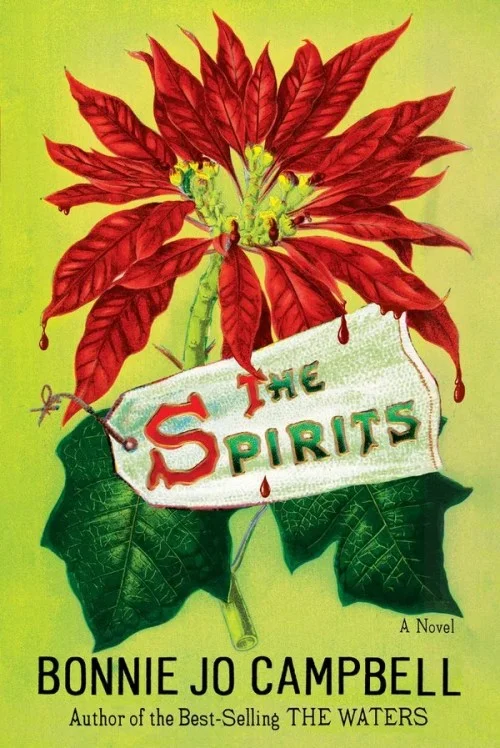
Bonnie Jo Campbell’s The Spirits turns a Christmas dinner into a test of whether a family can build something more sustaining than fear. The Whitbys gather around ham, pies and green bean casserole after a year of estrangement, with eldest sibling Sister returning to a home still raw from what happened the previous Christmas. Their father, dead for nine years, is present as a ghost: a violent man whose influence continues to shape how his children remember one another and themselves.
That pressure gives the novel its central question. Daddy Whitby’s bullying has left each family member with a different account of the past, and even the youngest children have concealed their part in his death. Over the course of one evening, old stories surface and familiar roles begin to shift. Campbell sees the dinner as a chance for the Whitbys to find a way forward together, while recognizing that the father’s influence cannot simply be erased.
In conversation with RS Deeren, Campbell discusses the novel’s relationship to Charles Dickens’s A Christmas Carol, the long preparation behind its quick writing process, and the challenge of keeping a large cast vivid in a single house. She also considers the role an outsider can play in a family’s reckoning, and why the novel’s hope rests on creating new bonds rather than pretending old wounds have disappeared.
Finding a new story inside an old one
Campbell did not begin The Spirits with a plan to recreate Dickens. She says she was following a story she felt compelled to tell and only later recognized that she had made a contemporary rural Michigan version of A Christmas Carol. The connection becomes visible through its echoes: a family haunted by Christmases past, Daddy’s resemblance to Scrooge, and Mary’s crutches.
That recognition mattered in revision. Campbell explains that she added crutches for Mary after she understood the Dickensian shape of the book. The choice also prompted her to consider how much Mary should share with Tiny Tim. She wanted Mary to carry some of his earnestness and innocence, then realized those qualities had become too dominant. Some were shifted to another character, allowing Mary to develop as a person with her own needs and contradictions.
For Campbell, the work of reinterpretation lies in balancing recognition with independence. Characters can reflect figures from a source story while still having desires strong enough to create fresh conflict. In The Spirits, that conflict has to work around a crowded dinner table, where everyone brings a different memory and a personal stake in what the family does next.
Campbell’s earlier short story “The Trespasser,” from American Salvage, was also compared to a familiar tale. She says she did not set out to retell “Goldilocks and the Three Bears”; a friend pointed out the resemblance afterward. In revision, changing the girl from a brunette to a blonde helped Campbell think further about the story she had written.
She enjoys considering the different ways writers can transform existing works. Campbell points to Jane Smiley’s interpretation of King Lear in A Thousand Acres and the structure of Barbara Kingsolver’s Demon Copperhead as works she admires. For her own novel, the Dickens connection became useful once she saw it: a prompt for deeper revision, rather than a template to follow.
A quick revision with a long history
The apparent speed of The Spirits came with a qualification. Campbell’s earlier novels, Q Road (2002), Once Upon a River (2011) and The Waters (2024), were separated by years of work. She told Deeren that the new book seemed to arrive quickly, but its groundwork had been under way for a decade.
The novel grew from an unpublished story of about a hundred pages. Campbell had put that story aside because too much remained unexplained and undeveloped, and because its shorter form felt too brutal. When she returned to it, she spent roughly a year and a half revising it into a novel. The process felt to her like a whirlwind, even a fever dream: each morning, she returned to her desk eager to understand what had happened to the Whitbys and make the story work.
That pace stands out beside the history of The Waters. Campbell says revising that novel took about seven years. It expanded to 650 pages before she began cutting it down. The Spirits also needed trimming, but she removed about twenty-five pages. After such a long process with the earlier book, getting this one ready in a shorter span felt empowering.
Still, Campbell does not regret allowing stories to develop over time. A tale held in mind for years can mingle with other stories, folktales, songs, dreams and fantasies. She describes that waiting as a way of becoming receptive to ideas and feelings that can guide the work. The quick final revision of The Spirits, in her account, grew from a much longer period of thought.
Keeping one dinner tense
Most of the novel unfolds over one night and within two rooms, a constraint Campbell embraced as a writing challenge. Her first inspiration was the family dinner itself. In The Waters, she had written a dinner scene that ran to forty-five pages; an earlier version had reached 110. She had told herself that a scene that long was not allowed. The rule gave her the idea to build an entire novel around the sustained pressure of a family meal.
The challenge was to make a scene hold energy while people sit and talk. Campbell says she had to discover what was at stake, and came to see the family’s integrity as the thing in danger. The Whitbys are not simply trying to get through dinner. They must face what their shared history has done to them and decide whether their family can still serve as a source of support.
Campbell describes the story as sentimental in its belief that a family can be a moral and supportive structure. She is not suggesting that families must live in perfect harmony. Rather, she is interested in the possibility that relatives can come together to address a problem while allowing each person to remain fully themselves. She has written about communities finding their own answers to community problems; here, she extends that idea to the family, which she sees as a tightly connected community.
The close setting also makes the distribution of attention a practical problem. Sister, Ma, Trevor, Beth, Doug, Mary and Daddy’s ghost all have their own wants. Campbell was glad to find a reason to send Ma away for a couple of hours, giving the others space to speak more freely. The children also alter the rhythm of the adult conversations.
Young Trevor’s jokes bring attention back to immediate concerns, such as what he wants for Christmas. Beth, a teenager, sometimes tries to make events appear sweeter than they are. Doug wants to survive the meal with his relationship intact. The family members, Campbell says, all want Mary’s attention. That variety gives the crowded scenes room for humour as well as confrontation.
Children at the table also shape what the adults can say. Campbell notes that The Spirits is her only novel without sexually explicit material. She brings up ghost-story writer M.R. James, who argued in an essay that erotic content does not belong in a ghost story. That observation has made her wonder whether she might someday challenge the convention.
Mary’s outsider view
Mary arrives as Doug’s new girlfriend, but her significance reaches beyond the relationship. She asks questions about the Whitby family’s history, including questions its members may have avoided asking one another. Campbell describes her through the archetype of the Guest: someone from outside a family who enters a settled situation and helps it change.
Campbell uses archetypes such as the Patriarch and the Caretaker to understand how characters might relate. She does not want those patterns to be visible as labels on the page; they are tools for thinking through the story. The Guest is especially useful here because Mary is not shaped by the family’s long-held memories and fears. Her presence lets the Whitbys see some of their history from a different angle.
She also changes how other characters behave. Campbell says the family is on its best behaviour around a guest, and that the outsider can draw out sides of people that usually stay hidden within the family. Mary’s questions challenge familiar explanations and invite the Whitbys to look again at moral questions they may have treated as settled.
For Campbell, Mary’s presence is essential to the evening’s movement toward forgiveness, comfort and joy after estrangement. An outsider cannot undo what happened, but can help a family notice where memory and affection have clouded its view. In a story so bound to what the Whitbys already know about one another, Mary’s unfamiliar perspective opens a little room for change.
Building beyond Daddy’s shadow
Daddy’s death has not freed the Whitbys from his influence. Sister, in particular, has taken on a role resembling her father’s: she works, fixes things and pays the bills. Campbell says this position does not suit her. The children retain different memories of their father, and those memories remain part of how they connect with one another.
Campbell’s aim is to imagine a life beyond the father’s authority without leaving the family with nothing to hold it together. She says the alternative to patriarchy is not simply women taking charge; she imagines something closer to community and democracy. The old structure may be harmful, but abandoning it creates another problem: the Whitbys need new bonds if the family is to endure.
Over the evening, relationships shift as family members learn more about one another and make plans for the future. Campbell describes the change as both a major realization and many smaller openings: “cracks and pinpricks [of] light and air.” The movement matters because the family is not asked to forget its history. It has to find forms of closeness that do not depend on the pain and inequality built into the old arrangement.
Nor does Campbell imagine that the Whitbys can become entirely free of Daddy. Sister has done things she will carry with her, and she still loves her father, respects what he knew and learns from his life as a warning. His temper and violence also persist in his children to varying degrees. Campbell says people do not simply eliminate bullies from their lives; they can be related to them and may depend on them, even as they recognize the harm they cause.
Her hope is for a larger community that can hold complicated relationships, soften them and give people room to keep learning. Campbell draws on a Jungian idea that some difficult problems are not solved so much as outgrown: people grow larger than what once confined them. That is the possibility she wants for the Whitbys.
What comes after this Christmas
Asked to imagine the family’s next Christmas, Campbell pictures Doug and Mary arriving by noon. Doug would drive out to get a tree, and everyone would help prepare dinner. The green bean casserole would give way to Brussels sprouts, perhaps broiled rather than boiled. The family would still argue, as families do, while Daddy’s ghost remained near the fireplace, quieter than before.
The scene is modestly hopeful. The ghost has not vanished; the family has changed its relationship to him. A shared meal remains, but it can take a different shape, with more people helping to make it and more space for them to be themselves.
Campbell says The Spirits is partly a response to the era in which she wrote it and to trying to find a way through a culture of bullying. She is wary of writing a novel whose relevance depends only on current events. Fiction, in her view, has to discover lasting concerns within immediate circumstances, so that it can be both timely and enduring. Whether she has managed that, she says, may only become clear fifty or a hundred years from now.
For readers, the novel’s invitation is to watch a family face its own stories without expecting one dinner to settle everything. The Whitbys’ next step comes through changed relationships, small recognitions and plans they can make together. Daddy remains part of their history; the question is whether they can keep building a life that gives that history less power over what comes next.
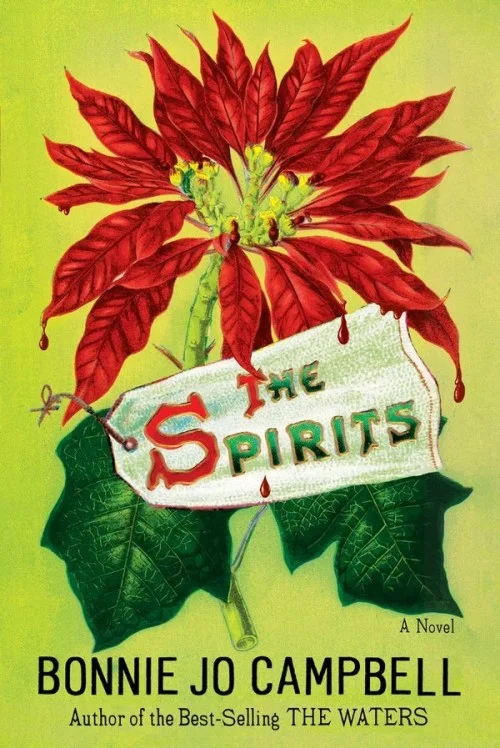
FICTION
The Spirits
By Bonnie Jo Campbell
W. W. Norton & Company
Published October 13, 2026

The post “Move on from a politics of bullying:” Bonnie Jo Campbell on her Latest Novel “The Spirits” appeared first on Chicago Review of Books.