Adam O’Fallon Price’s “Objects of Desire” Finds Comedy in Creative Disappointment
Story by Ian MacAllen · 485 readers
In linked stories about lonely strivers and elusive success, Adam O’Fallon Price makes even deeply flawed characters hard to dismiss.
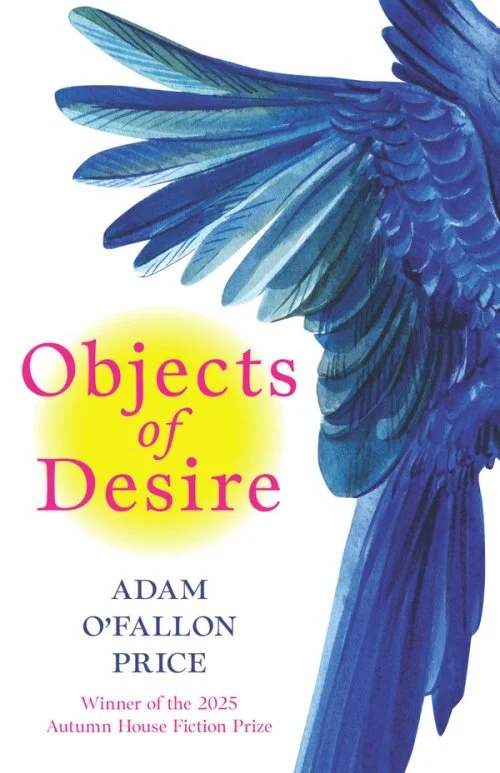
Adam O’Fallon Price’s debut collection, Objects of Desire, looks at the gap between the life people imagine and the one their choices produce. Its protagonists are writers, athletes and other aspirants who want recognition, love or victory, yet rarely define what would count as enough. They’ve often had some early success. What follows is the harder part: living with results that feel smaller than the promise they once saw in themselves.
Price’s people can be selfish, vain and difficult company. They dodge responsibility, cut corners and sometimes lash out when ambition stalls. The collection’s pleasure lies in the tension between their bad behavior and the sadness beneath it. These characters are not easy to admire, but Price’s humor and attention to their loneliness make them surprisingly easy to understand.
Flawed people, recognizable needs
Mark, the college student at the center of “Dancing With Berg Hermly,” would rather play an online game than complete his coursework. When his roommate suggests copying an old paper, Mark hesitates, then brings the method into other classes. The story traces his gradual willingness to plagiarize, while giving that choice a social and emotional context. Mark is isolated and drawn to Ainsley Chelmsford, a boy in his biology class who also plays Animal Kingdom. Their shared interest feeds Mark’s attraction, but doesn’t help him confront how little connection he has with other people.
Mark also puts off thinking about his sexuality. He knows that attitudes toward sexuality have broadened, and uses that change as a reason to delay self-examination. As he puts it, “while it had once seemed inevitable that he would have to come out of the closet, it no longer felt necessary.” The line captures his ability to turn a wider sense of acceptance into an excuse for remaining alone. His cheating invites disapproval; his yearning for closeness complicates it. Price holds both facts in view.
“Marrow” gives that friction a family setting. Steven considers withholding a bone marrow donation that could save his brother James, who mistreated him as a child and later married Steven’s ex-wife, Hannah. Steven’s resentment is understandable, but he also manipulates Hannah and treats the possible donation as a way to stay near her. James is no more straightforwardly sympathetic. The story offers no clean moral center, and its dry comic timing keeps the brothers’ behavior from settling into simple condemnation. A request for help from Hannah ends with the revelation that Steven and James are brothers—a compact turn that sets the story’s wry tone.
Creative work and the fear of falling short
The collection is most pointed when it turns toward artistic ambition. In “Sandstorm,” Paul Wakeling lives comfortably in a large house paid for by his wife, while his own writing career has leveled off. His creative writing class becomes a place to bully a student rather than encourage one. The story understands how professional frustration can seep into teaching, especially when someone who once imagined a larger artistic future has to face the work in front of him.
Paul’s predicament may prompt readers to wonder whether Price has drawn on his own life. The same question arises in “Hoboken,” where Evan struggles with sobriety and enters a self-destructive spiral. The stories feel lived in, but the review’s central point is that their force doesn’t depend on proving they are autobiographical. Price makes the characters’ unease convincing enough that the question can linger without an answer.
Across these stories, failure rarely arrives as a single dramatic event. It accumulates through habits, compromises and expectations that remain out of reach. The characters want to publish, win or be loved, but they don’t have reliable measures for when those desires have been met. That vagueness leaves them free to keep striving—and to keep feeling cheated by what they have.
Youth, achievement and the stories we tell ourselves
“A Last Chance in Whitefish” sets two stages of life alongside one another. Eugene, the narrator, is just beginning his adult life and drives through the West without knowing what direction to take. He picks up a woman and an older man, Zell Jeffers, an artist who is recognized in some circles but hasn’t become a household name. Jeffers offers a picture of what a creative life can look like after the promise of youth has met the limits of actual achievement.
The contrast sharpens one of the book’s recurring observations: youth can feel disappointing because so little has been accomplished, while maturity can bring disappointment over how much less was achieved than expected. Success remains a moving target. The characters measure themselves against imagined futures, and few can feel satisfied with what they have made of the present. Price doesn’t offer a parade of winners; his people are left to reckon with the ordinary results of ambition.
That view gives the collection its sadness, but not a heavy hand. The comedy comes from the characters’ attempts to excuse themselves, turn setbacks into someone else’s fault or salvage pride through small victories. Their shortcomings are often comic; their isolation is not. Price lets both registers coexist, so readers can recognize a human need for connection without having to approve of the choices made in its name.
Objects of Desire returns to a question that matters to anyone who has tried to make something: what happens when the finished work falls short of the one imagined? Price’s stories suggest that external obstacles play a part, but that people can also become their own impediment. The standards they use to judge success may keep changing, and the desire to be seen can outlast any achievement. Readers drawn to character-driven fiction, uneasy comedy and stories about creative lives will find a collection that takes disappointment seriously while still finding reasons to smile.
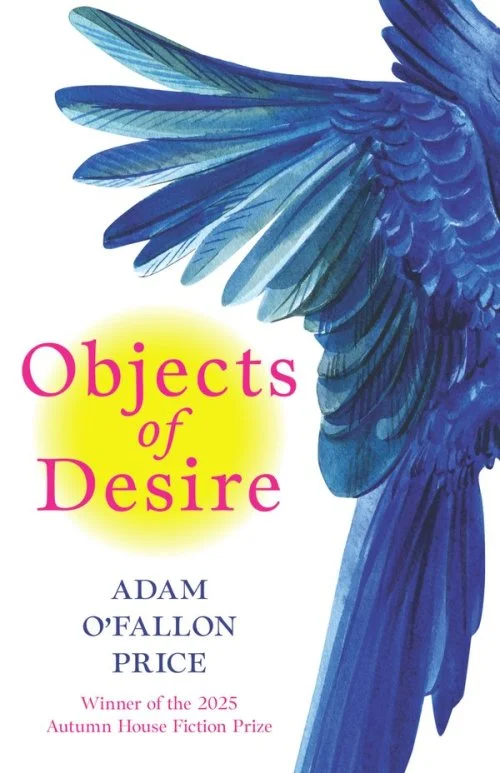
FICTION
Objects of Desire
By Adam O’Fallon Price
Autumn House Press
Published October 6, 2026

The book’s strongest thread is its clear-eyed account of ambition after the first rush of possibility fades: the characters may not become winners, but their struggles make for sharp, humane fiction.