Glenway Wescott’s *Goodbye, Wisconsin* Finds the Unsettled Heart of Home
Story by Ross Collin · 575 readers
Belt Publishing revives Wescott’s 1928 stories of people pulled between escape and return, with Wisconsin’s farms and small towns shaping their lives.
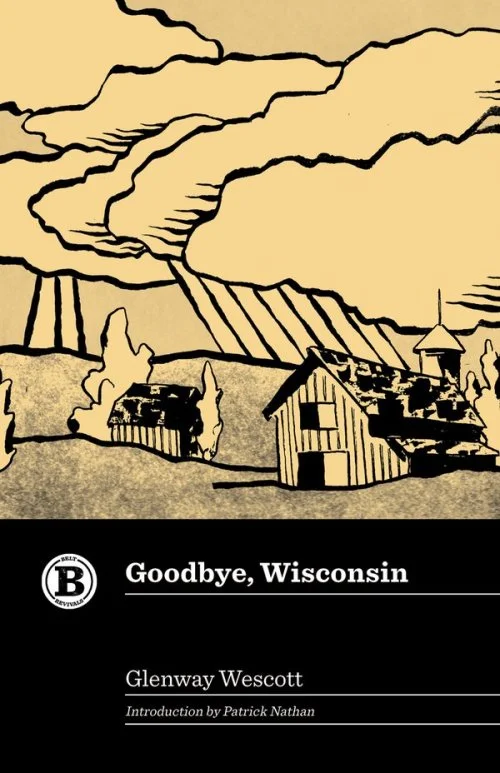
Goodbye, Wisconsin is held together by a tension its title can’t resolve: leaving home may change a life, but it doesn’t erase the place a person came from. Glenway Wescott’s stories follow people who depart, return, or discover that familiar surroundings have become strange. First published in 1928, the collection is returning to readers through Belt Publishing’s Revivals series, with a publication date of October 20, 2026.
Wescott knew that movement firsthand. Born in 1901 on a farm in southeastern Wisconsin, he left the state as a young man, living first in Chicago, then Santa Fe, Berlin, and Paris. In France after World War One, he joined a circle of expatriate artists that included Gertrude Stein and Ernest Hemingway. His 1927 novel The Grandmothers earned acclaim in Europe and elsewhere. In the following decade, as conditions in Europe worsened, Wescott and his lifelong partner, Monroe Wheeler, returned to America. They settled in a house on a New Jersey dairy farm purchased by Wescott’s brother.
That biography gives the collection’s departures and returns a particular resonance, though the stories stand on their own as portraits of people who can’t neatly leave their past behind. One sailor comes home to his family’s Wisconsin farm with tales of lively European ports. His brother, meanwhile, remains occupied with the relentless work of farm life. In another story, a young man at the altar finds his thoughts turning to a former love: a married woman who rejected him after her husband came back to the area. These are different kinds of return, but each brings the past into the present.
A woman’s homecoming after prison offers the collection’s starkest image of estrangement. She has served her sentence for killing the man she expected to marry, and the people and places she encounters no longer feel like hers. Wescott describes her release in a passage that makes ordinary surroundings feel almost unreachable:
“Free and out of doors, she was astonished by the mediocrity of her feelings. There was the immortal blue sunlight, the seedy trees in line against the brick walls, as vivid on the outside as they were leaden within, and beyond them the flimsy residences, the lawns rich with hammocks, washing, pigeons, children at play. The sight of these things did not quite penetrate her heart.”
The woman is outside, but freedom doesn’t instantly restore her connection to the world. Wescott’s precise details—the blue sky, worn trees, laundry, pigeons, children—make the distance palpable. Wisconsin in these stories is no vague emblem of home. Its light, buildings, farms, and town streets shape what the characters remember and what they struggle to recognize.
A portrait that refuses easy judgment
Wescott also complicates the picture of Wisconsin as a place of quiet conformity. In “Prohibition,” he introduces Old Reilly, an alcoholic whose practical jokes and drinking trouble the community. The farmers and their wives disapprove of him, yet can’t bring themselves to hate him. Their uneasy tolerance, as Wescott frames it, comes with a demeaning judgment: they see Reilly as “something less than a man, an irresponsible animal in human form.”
The story doesn’t ask readers to mistake sympathy for innocence. Reilly abuses his family when he returns from a drinking bout, and Wescott leaves that cruelty in view. His treatment resists the comfort of assigning someone a single role, whether monster or harmless local character. The townspeople’s indulgence doesn’t erase the damage he causes; their moral certainty doesn’t make their dehumanizing view of him fair.
After Reilly falls asleep in the snow, frostbite leaves him without both hands and feet. Some local Prohibitionists come to see him, apparently expecting his injuries to stand as a lesson against drink. Instead, they find a man who remains drunk and seems unconcerned with the meaning they have brought to his bedside. Wescott writes that the visitors “forgot what they had come for.” The scene punctures the idea that suffering automatically turns a person into a useful example. Reilly’s condition doesn’t tidy the story into a warning with a simple moral.
Wisconsin as a place remembered
The stories’ settings give that moral uncertainty a grounded, local texture. Characters pass through Milwaukee and Chicago, while much of the action unfolds on farms and in small communities such as Brussels and Belleville. Wescott makes these places feel both specific and difficult to hold onto: recognizable enough to anchor a life, altered enough by time and distance to feel unfamiliar.
For contemporary readers, the rural and small-town scenes may have the air of a vanished world. The characters aren’t surrounded by the modern highways and home radios that can connect a place to life elsewhere. Their options for getting away seem narrow, and departures can feel almost miraculous. Yet the emotional lives Wescott gives them don’t feel remote. They’re ambitious, angry, tender, lonely, and drawn toward love—recognizable impulses even when their circumstances belong to another era.
That balance is the collection’s lasting appeal. Wescott neither turns home into a refuge everyone longs to reclaim nor treats leaving as a clean break. A person may move far away, or return to the same streets, and still find that belonging has changed. Goodbye, Wisconsin suggests that places remain part of us through memory, conflict, and the details we carry forward. For readers drawn to literary stories about the pull of home and the limits of escape, this revival offers a vivid, unsentimental place to begin.
FICTION
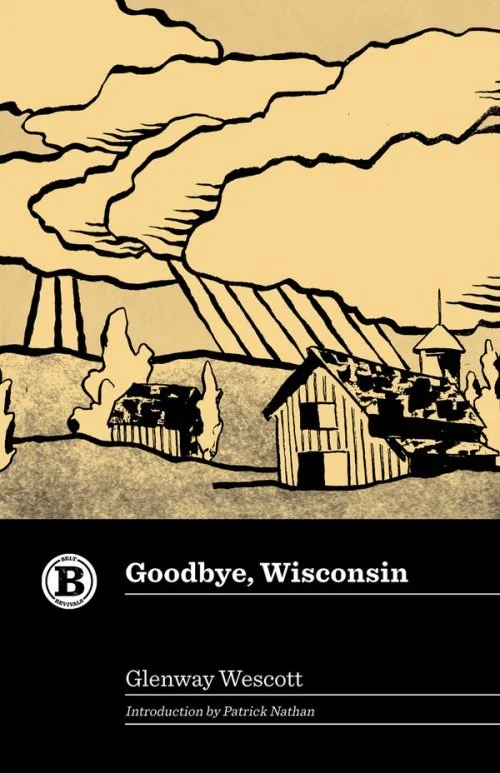
Goodbye, Wisconsin
By Glenway Wescott
Belt Publishing
Published on October 20, 2026

The post What You Can and Cannot Escape in “Goodbye, Wisconsin” by Glenway Wescott appeared first on Chicago Review of Books.