Jesper K. Lassen’s In Otto’s Shoes Turns Empathy Into a Two-Sided Picture Book
Story by Lauri Fortino · 379 readers
In Otto’s Shoes gives young readers two views of a friendship mix-up, using a simple change of shoes to make empathy tangible.

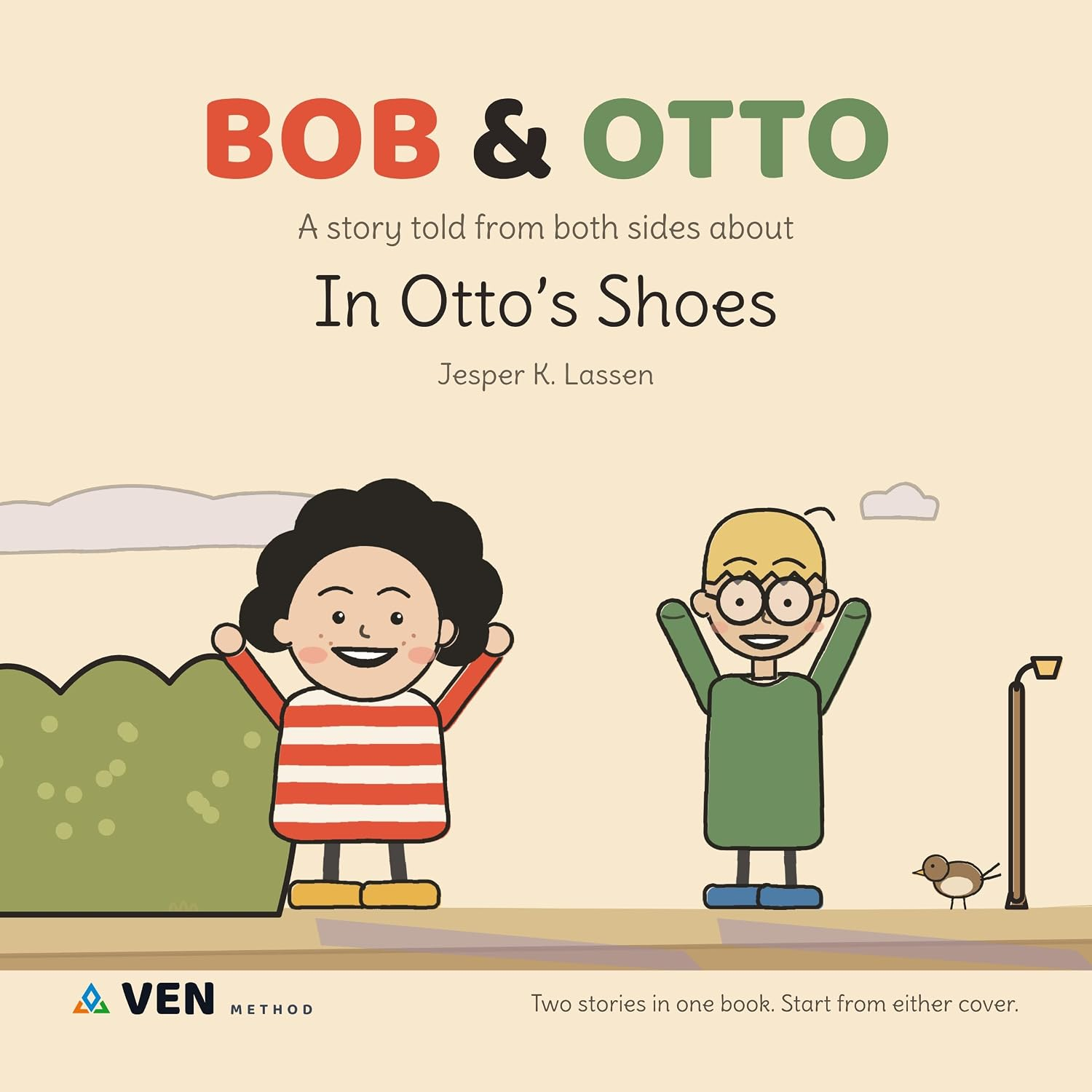
Jesper K. Lassen builds the idea of perspective into the way readers handle In Otto’s Shoes. This picture book offers two accounts of a friendship mix-up: read from one direction for Bob’s side, then turn the book over to follow Otto’s. The pages and words stay the same, but the point of view changes. For children learning that another person can experience the same situation differently, that physical act of turning the book gives the idea a clear, memorable form.
Published by VEN Method on September 10, 2026, In Otto’s Shoes is the fifth book in the Bob & Otto series. It is planned for paperback and Kindle eBook, and is aimed at children ages 4–8. Lassen is credited as both author and illustrator. The publisher describes VEN Method as focused on social-emotional learning that builds connection and community in classrooms and at home.
One friendship mix-up, two points of view
The premise centers on Otto’s new shoes, which hurt. On the walk home, Bob and Otto swap shoes halfway through, letting each experience the other’s walk. That exchange gives the book a concrete starting point for discussing empathy: a child doesn’t need an abstract explanation to understand that uncomfortable shoes can change how a walk feels. The story makes the familiar idea of imagining life from someone else’s position literal enough for a young audience.
The structure extends that idea beyond the characters’ footwear. Reading from Bob’s direction presents his side of the mix-up; turning the book over shifts attention to Otto’s. Since the words and pages are shared, readers can compare how the same material works when approached from a different perspective. That design makes the book suited to rereading, and it gives an adult and child a natural reason to talk about what each character may be feeling.
For grown-ups reading aloud, the format also offers a useful prompt: what changes when the story begins with the other friend? The book’s description doesn’t spell out the details of the mix-up, and there’s no need to presume more about its events. The central invitation is already clear. Children can consider how a shared situation might feel different to each person, then connect that question to the everyday work of listening and friendship.
A phrase that frames the experience
The story opens and closes with “I like your shoes.” That repeated line links the beginning and end, while the shoe swap gives it added meaning. A compliment about footwear becomes part of a larger idea about noticing another person: what they’re experiencing may not match what you feel yourself. The line is simple enough for the intended age range to remember, but its placement gives readers a reason to revisit it after both sides of the book.
That kind of repetition can help make a read-aloud participatory. Adults might ask children what they remember about the shoes, or invite them to think about how Bob’s and Otto’s experiences relate. These are possibilities for conversation rather than prescribed lessons. The book’s setup leaves room for children to work through the contrast in their own words, with the turn-around format doing some of the teaching through the reading experience itself.
For home and classroom reading
The age range of 4–8 makes In Otto’s Shoes a potential choice for shared reading across the early years. Younger children can follow the concrete detail of shoes that hurt and the decision to swap; older readers may be ready to compare the two perspectives and discuss what empathy means in a friendship. The description points to classroom and home use, where adults can connect the story’s premise to conversations about feelings and understanding one another.
Its two-direction design may be particularly engaging for readers who enjoy books that ask them to interact with the object in their hands. Rather than treating the book as a single forward-moving account, the reader turns it around and starts again with a different character. That small shift gives the format a clear purpose: the experience of reading mirrors the story’s interest in seeing a situation from more than one side.
In Otto’s Shoes is scheduled for release on September 10, 2026, in paperback and Kindle eBook. As the fifth Bob & Otto book, it brings a focused, accessible premise to the series: one friendship, one uncomfortable pair of new shoes, and two ways to walk home. Its most inviting feature is the close fit between form and subject. Readers don’t only hear about taking another person’s perspective; they turn the book and try it.