Brian Won on Bringing the Long, Loopy World of *Horizontal Crocodile* to Life
Story by Mel Schuit · 488 readers
Brian Won shares how a ribbon-like crocodile, colored-pencil textures and a hidden worm shaped his illustrations for Scott Rothman’s *Horizontal Crocodile*.

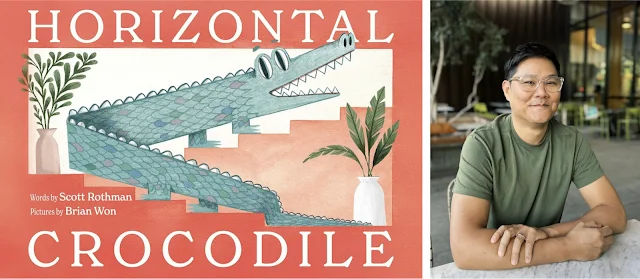
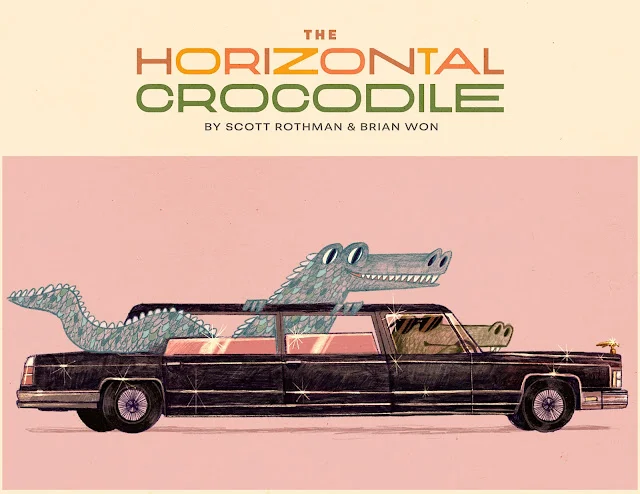
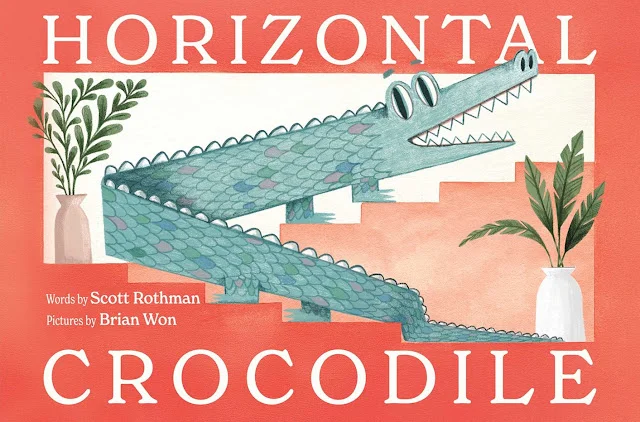
For Brian Won, illustrating Horizontal Crocodile began with a drawing that had no story yet. The picture book, written by Scott Rothman and published by Simon & Schuster Books for Young Readers, follows a very long crocodile trying to tidy his very long home before his long-lost best friend visits. Won’s work turns that simple setup into a visual puzzle: how do you keep one character feeling wonderfully, impossibly long across a sequence of pages?
Won had just completed Warm and Fuzzy with Rothman when the pair decided to work together again. Won already had a crocodile sketch he liked, but hadn’t found the right story for it. His first idea involved a lost tooth. Rothman took the character’s unusual length in another direction, building a story around it. Won says the manuscript’s unexpected turns quickly gave him a clear picture of how the illustrations might look.
A crocodile with room to stretch
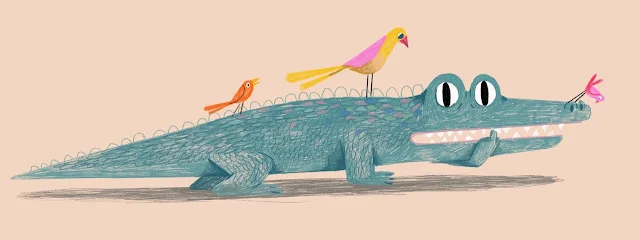
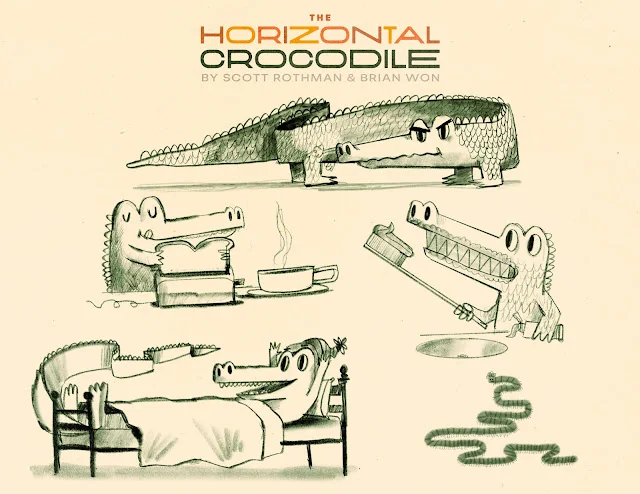
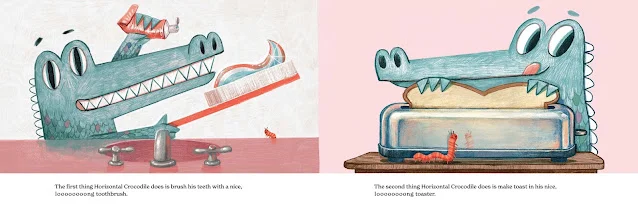
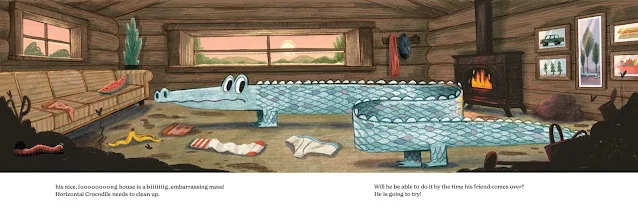
The book’s premise gives the artwork its central challenge. Won needed the crocodile to read as exceptionally long from spread to spread, while still moving expressively through the scenes. He initially worried about getting the animal’s anatomy right. The solution came when he stopped treating the body as a conventional structure and began thinking of it as a ribbon: sometimes stiff, sometimes flowing, depending on what the moment called for.
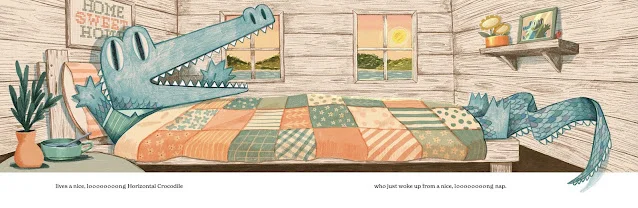
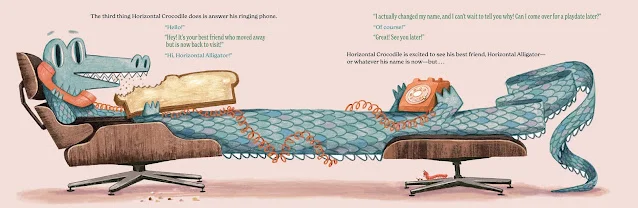
That flexible approach shaped the page design, too. Won bends the crocodile’s body back and forth to fill a spread, and sometimes lets the tail trail beyond the illustration into the text area. The character seems to outgrow the borders of the book. The effect makes the long body part of the storytelling, rather than a detail the art simply needs to accommodate.
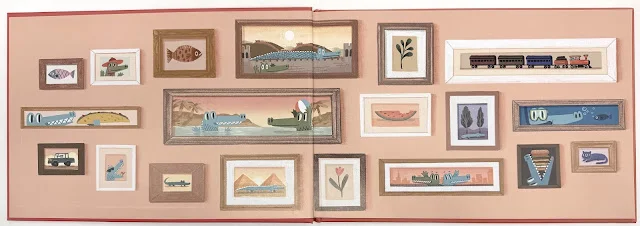
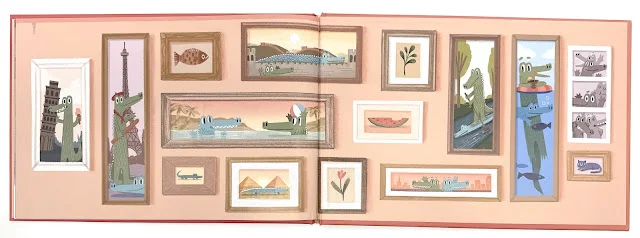

One of the book’s most satisfying moments for Won is its gatefold reveal. The preceding spreads establish the crocodile and his home as parts of a broad, horizontal world, so the expanded page feels like a natural payoff to the visual idea. Won also tucked a small worm into almost every spread, giving readers a recurring detail to look for on a second pass. Those touches reward close attention without taking focus away from the central joke.
From first impressions to finished pages
Won says his process starts while he reads: his mind begins to “paint the scene,” imagining the book’s look and feel. That early response helps guide the artistic direction. Across his career, he has moved from vector-based art layered with scanned ink-wash textures toward a colored-pencil look, which readers can see in both Warm and Fuzzy and Horizontal Crocodile.
For this book, Won made the illustrations in Procreate and Photoshop, relying mostly on pencil brushes. He likes the texture and looseness they provide, and jokes that he’s “too chicken not to have an undo button.” The digital tools also let him draw on an iPad during his roughly three-hour round-trip train commute. Even bumpy tracks can become working time.
New comics and favorite influences
Outside picture books, Won has been making comics for Instagram, where he shares embarrassing memories and everyday experiences. He describes the work as unexpectedly cathartic. The shift to personal comics offers a different kind of storytelling from the carefully paced page turns of a picture book, but both formats give him room to build a visual voice around specific moments.
Asked who he would choose to illustrate a picture-book autobiography, Won named Quentin Blake. He has long admired Blake’s pen work and the loose, seemingly effortless quality of the drawings. Charlie and the Chocolate Factory was one of Won’s favorite childhood books, and he’s curious how Blake might depict the less exciting stretches of his life.
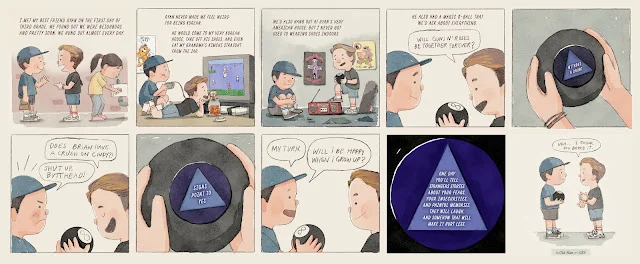
@bwon1 is where readers can find Won’s comics. And Horizontal Crocodile offers another invitation to look closely: follow the crocodile’s winding body across the spreads, then see if you can find the little worm.

This post contains affiliate links. For more information, visit the policies & disclosures page.