Maya McKibbin on Illustrating Makade Asin / Black Stone and Creating a Graphic Novel
Story by Mel Schuit · 938 readers
Maya McKibbin discusses the visual choices behind Makade Asin / Black Stone and shares plans for a young adult graphic novel.

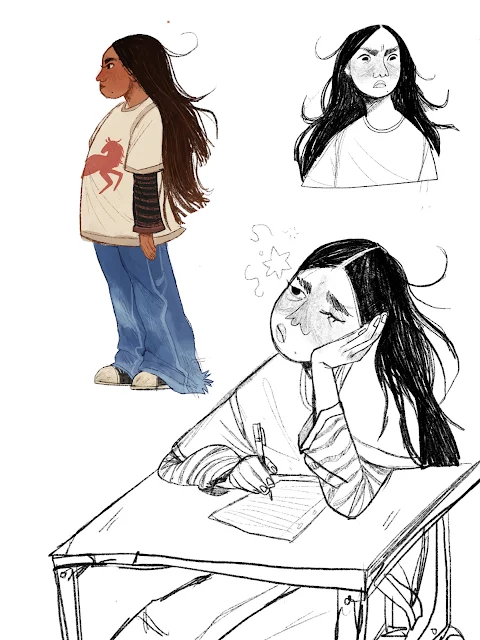
For illustrator Maya McKibbin, Makade Asin / Black Stone was a chance to build a story through images while learning from its Anishinaabemowin text. The picture book, written by Darcy Whitecrow and Cail Judy and translated by Pamela Johnson, follows a boy seeking a black stone after a nightmare. Its vision quest takes him through jungle, ocean and desert, where the creatures he once feared may help him face his anxieties.
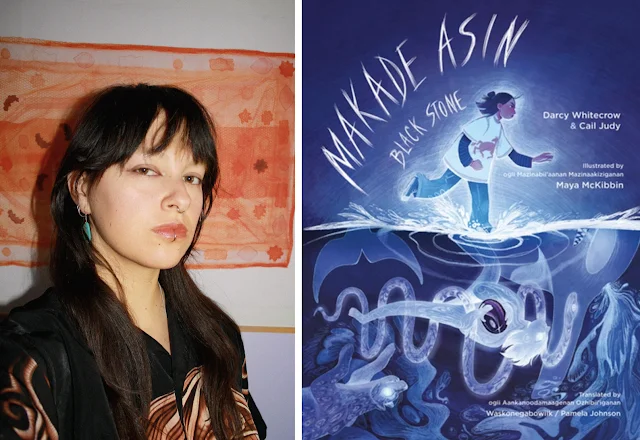
McKibbin’s connection to the project began at the Vancouver Comic Arts Festival, where Judy met them and later recommended them to Groundwood Books. When McKibbin first read the manuscript, they saw how much the story depended on the pictures. The writers had a clear sense of what each page and spread should show, making the project a more directed process than McKibbin had experienced before. That guidance also opened up a world of shifting forms and uncertain boundaries between what appears real and what does not.

Building the book one page at a time
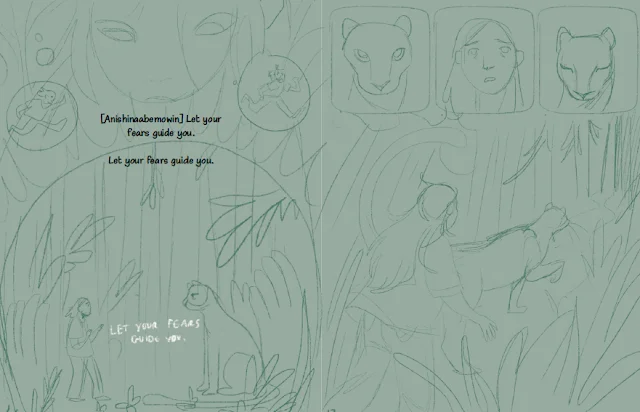
McKibbin begins a new project by reading the manuscript repeatedly, keeping notes nearby and sketching any images, page designs or shapes that emerge. They also gather references from paintings, photographs and comics, paying attention to choices such as composition, colour and texture. Rather than copy a source, McKibbin draws on the elements that might help shape the book’s own visual language.
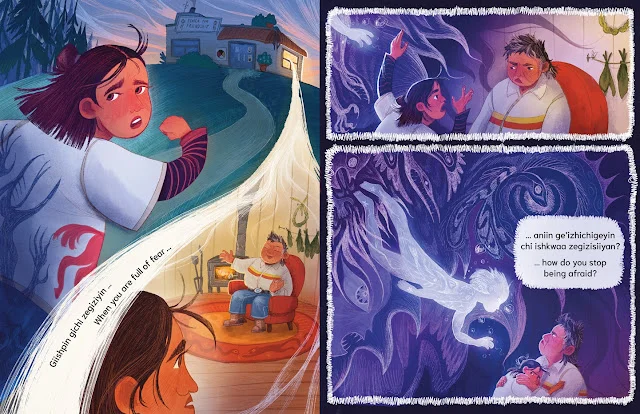
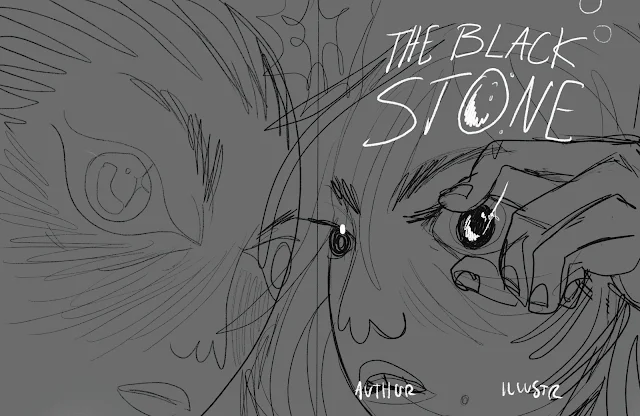
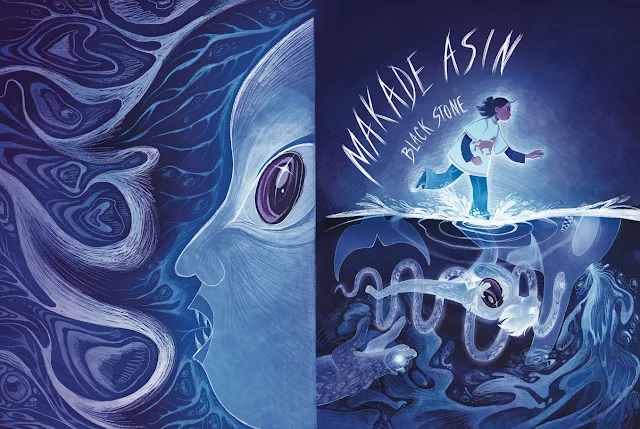
For Makade Asin / Black Stone, that exploration moved from small page sketches to larger digital mock-ups on canvases scaled to the finished artwork. Once the writers and publisher responded to a direction, McKibbin developed it into final illustrations. The process gave the team room to test how each image could carry the story while working within the book’s closely planned sequence.
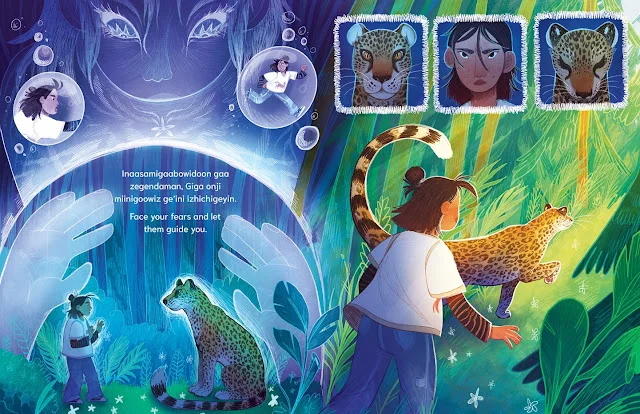
One of the central visual decisions was to give the boy’s anxiety a form: his shadow self. McKibbin made the shadow a guide who can also hold the child through moments of fear and confusion. It becomes a recurring presence for readers to follow, anchoring the story as the boy moves through unfamiliar settings.
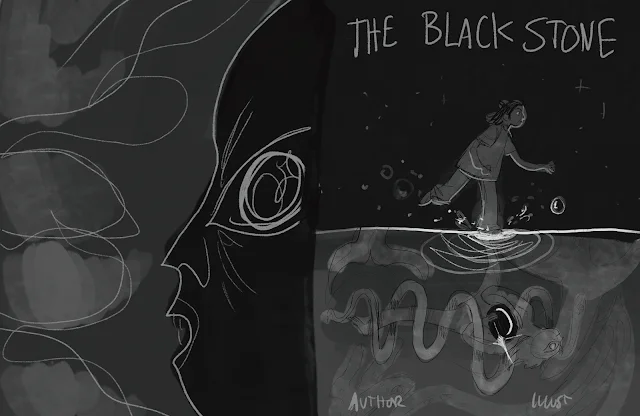
McKibbin also repeated comic patterns in scenes where the boy meets Jaguar and Snake. Those moments include pauses for reflection and calm, offering a visual rhythm within the journey. McKibbin hopes the shadow and repeated patterns will connect with readers of different ages.
Digital tools, with room to experiment
Digital art is McKibbin’s preferred starting point. It offers flexibility with colour and texture, including the ability to create and adjust brushes. Because they expected to travel while working on the book, they began it in Procreate. They were accustomed to using a Wacom Intuos tablet and welcomed the chance to try a different setup; a former employer, Spotted Fawn Productions, had given them the equipment.
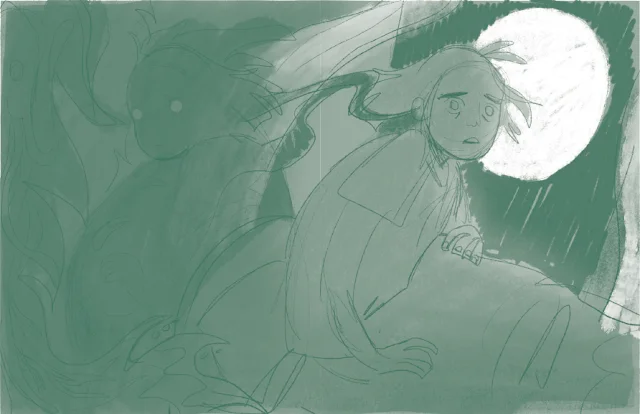
McKibbin says they’re proud of the finished work and are interested in tools that let them draw directly on a screen. That approach feels more immediate to them, encouraging looser, freer marks. Digital art also suited the practical limits of their early working life: it fit at a desk, offered many materials and functions in one place, and cost less than building a traditional studio practice with paints, pencils and paper.
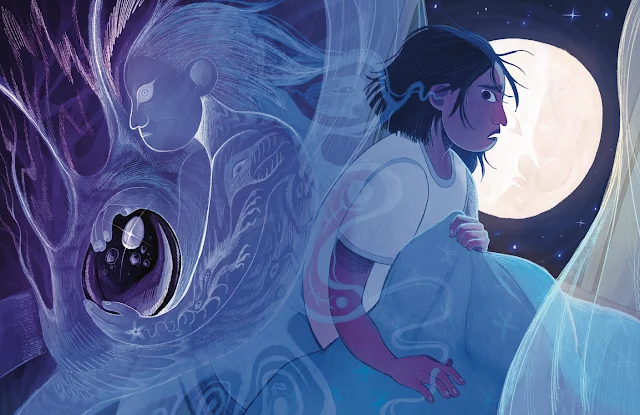
They’d like to combine graphite and coloured pencils with digital finishing, but experimentation takes time and stability. Freelance contracts and delivery deadlines can leave little space to test a new method. McKibbin has still been trying varied work, including 3D animation, dog sledding and a job with a moving company. They describe that mix as chaotic, but enjoy collecting different skills.
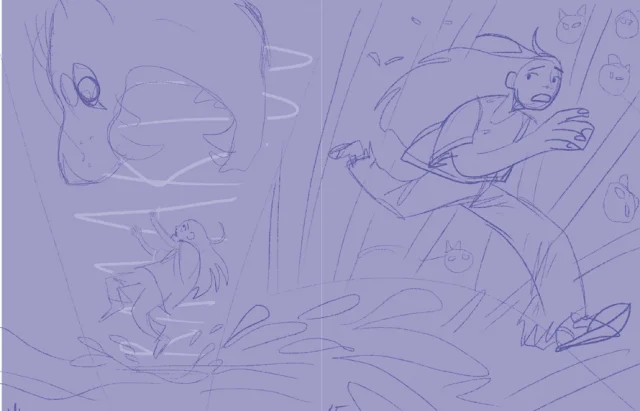
Each new book also builds on the lessons of earlier ones. McKibbin feels they’re improving with every story, learning what they might do differently next time. That sense of growth is part of what makes the work exciting for them.
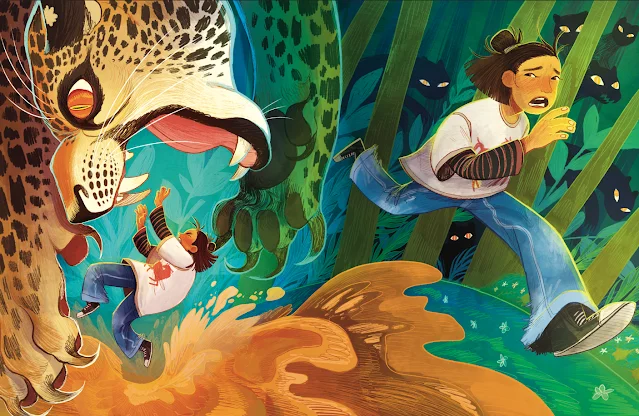
A graphic novel of their own
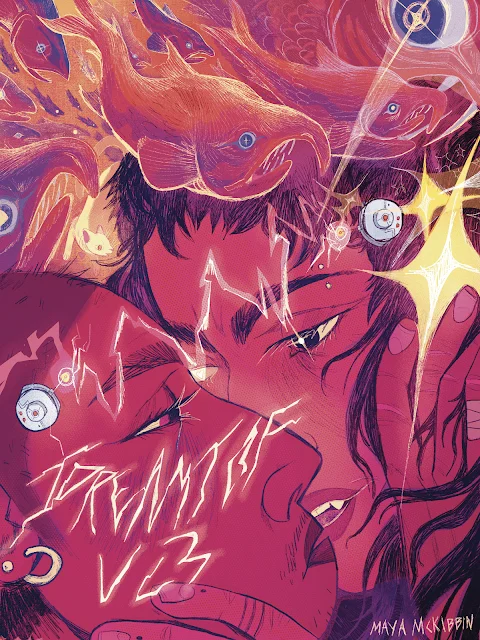
McKibbin is developing a young adult graphic novel for distribution and publication by Alison O’Toole’s Balustrade Press. They said the long-running script was expected to reach its close in October and that they wanted to have fun with the project. Their inspirations include Inés Estrada’s Alienation and the Meg, Mogg and Owl comics, works they admire for their chaotic, topical and hand-drawn qualities.
The story follows three queer people in their thirties in a future world shaped by surveillance and mega corporations. They fight, transform and dream as they try to protect the dreamscape from an artificial intelligence invader. McKibbin describes the project as a chance to draw trans characters turning into monsters, loving one another and tearing apart robots.
The graphic novel follows McKibbin’s work on Scholastic Canada’s Haunted Canada Graphic Novel volumes two and three. Alongside the book, they’re animating a friend’s film and illustrating for local businesses. They also hope to sign another story of their own with a publisher in the winter.
A family story McKibbin wants to tell
Asked whom they’d choose to illustrate a picture book autobiography, McKibbin named their great great grandmother, Susan Olivia Poole. They’d like to honour Poole’s life and her creation of the Jolly Jumper, a familiar item that, McKibbin points out, many people may not know was invented by an Ojibwe woman.
Family stories span Poole’s life in different places, her mother and children, and her knowledge of Anishinaabemowin. McKibbin would want to depict her movement across the continent as an Indigenous woman, the creation of the Jolly Jumper and how she was coerced into selling its patent for pennies. They imagine working with relatives to bring together the stories each person holds. For McKibbin, that shared process could be both illuminating and rewarding.
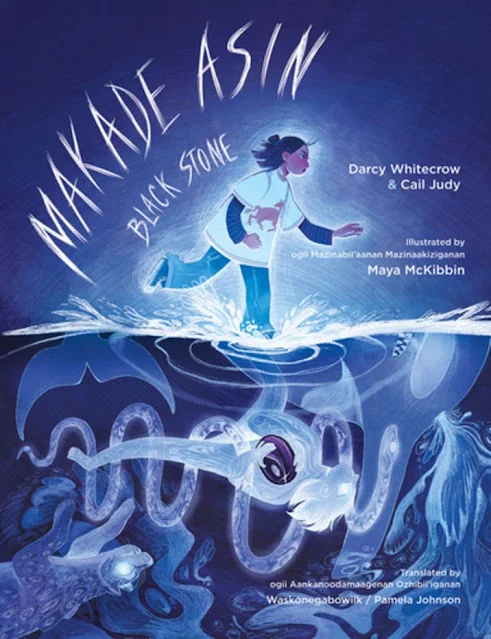
Makade Asin / Black Stone was published by Groundwood Books this summer. McKibbin’s account of making it points to the close relationship between a picture book’s visual structure and its emotional path: the boy’s shadow gives his fears a shape, while recurring patterns make room for reflection. Their next work will take that interest in vivid, personal worlds into a graphic novel of their own.