Andromeda Diaz and the Reasonable Doubt Brings a Fifth-Grade Mystery to Life
Story by Greg Pattridge · 706 readers
Emily Galvin Almanza’s middle-grade mystery pairs a school theft investigation with questions about fairness, evidence and how we judge others.

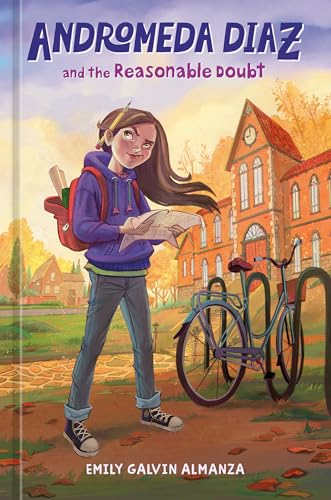

In Andromeda Diaz and the Reasonable Doubt, a missing gold watch becomes a test of how carefully a school community weighs evidence. Fifth-grader Andromeda Diaz, known as Andy, believes her classmate Benji Jones is a good person. When the watch turns up in his desk, she has reason to question the easy conclusion that he took it.
Emily Galvin Almanza builds the mystery around a young protagonist who has spent years listening to her parents talk about their work. Both are public defenders, and their conversations have taught Andy how they challenge unfairness. She hasn’t set out to take on a case herself, but Benji’s predicament gives her a reason to put those lessons into practice.
A classroom mystery built on evidence
Andy and her best friend, Danny, retrace what happened before the watch disappeared. They talk with witnesses and look for evidence that could clear Benji. The investigation asks readers to keep pace with the children: What do the details actually show? Which assumptions are getting in the way? And does finding the watch in Benji’s desk settle the matter?
The school’s principal, vice principal and security officer are convinced they’ve identified the person responsible. Their certainty adds pressure to Andy and Danny’s search. The children must make their case while adults around them have already formed a judgment. That setup gives the mystery its momentum and lets young readers assess the clues alongside the investigators.
The story’s focus on fairness comes through the action rather than a detached lesson. Readers see how a quick conclusion can shape the way people treat someone, and why it matters to look closely at what is known. The book introduces ideas about truth and the protections people should receive when they are judged. For parents and teachers, that gives the plot natural openings for conversation about listening, evidence and second chances.
Andy and Danny make a lively investigative pair. Andy brings the example she has absorbed at home; Danny joins her in piecing the story together. Their friendship gives the inquiry a warm center, while Andy’s confidence makes her an appealing lead for readers who enjoy seeing a young character take responsibility and ask difficult questions.
Details that keep the pages turning
The book has 17 chapters, with headings and, usually, a small illustration that hints at what’s coming. Those signposts offer a little preview without resolving the mystery, and they give the chapters an inviting, readable rhythm. The reviewer found them especially effective at making it tempting to read one more chapter before putting the book down.
Readers get to form their own view as the clues emerge, considering whether Benji is responsible or whether the evidence points elsewhere. That invitation to think along with Andy and Danny makes the central puzzle more engaging than simply waiting for an answer. The stakes are understandable to middle-grade readers: a classmate is being blamed, and the children want to know whether the facts support that judgment.
Andy’s parents also bring an interesting dimension to the story. Though they share a profession, the reviewer notes that they approach their work differently. Their contrasting styles make room for a useful observation: people in the same line of work needn’t handle a problem in identical ways. The family background shapes Andy’s perspective while leaving her to do her own thinking.
Teachers may find the author’s discussion guide a helpful companion. It includes questions and activities for classroom use, extending the book’s themes into a group discussion. The guide suits a story that naturally invites readers to compare interpretations and explain what led them to a conclusion.
Book details and author
Andromeda Diaz and the Reasonable Doubt is by Emily Galvin Almanza. Its book birthday is September 8, 2026, and it runs 192 pages. The reviewer’s recommendation rests on the blend of mystery, friendship and an accessible introduction to questions of fairness, with Andy’s determined voice at the center.
Almanza is the Co-Founder and Executive Director of Partners for Justice, a nonprofit that develops a collaborative model intended to support public defenders nationwide. Before co-founding the organization, she worked with clients at the LA County Public Defender, Santa Clara County Public Defender, Bronx Defenders and the Stanford Three Strikes Project. She has said she believes everyone is entitled not just to equal justice, but to equal mercy.
She graduated from Harvard University and Stanford Law School, where she received the Deborah Rhode Prize for her work in the public interest. After her first year as a public defender, she clerked for the Honorable Thelton Henderson of the United States District Court for the Northern District of California. In 2017, the American Bar Association named her among its Top 40 Young Lawyers. Her writing has appeared in The Atlantic, The Washington Post, Newsweek, Teen Vogue and TIME. Crown published her book The Price of Mercy in February 2026. More information is available on her author website.
The final page hints that Andy may have another case ahead. For readers who enjoy following clues and watching a young detective learn to trust careful inquiry, that possibility is a welcome reason to look forward to more from her.