Julie Larios’s Flaneur Exercises Turn Everyday Walks Into Writing Material
Story by laurakvasnosky · 512 readers
A writer’s walks inspired by Julie Larios show how attentive wandering can reveal layered histories, unexpected stories and fresh material for the page.

For writers, a walk can become more than a break from the desk. Julie Larios’s “Art of the Flaneur” sessions offered a way to turn ordinary streets into material for attention: notice what’s usually passed by, collect the details, and see what patterns begin to emerge. The practice changed how I think about inspiration. Stories can rise from inward reflection, but the world outside has its own supply.
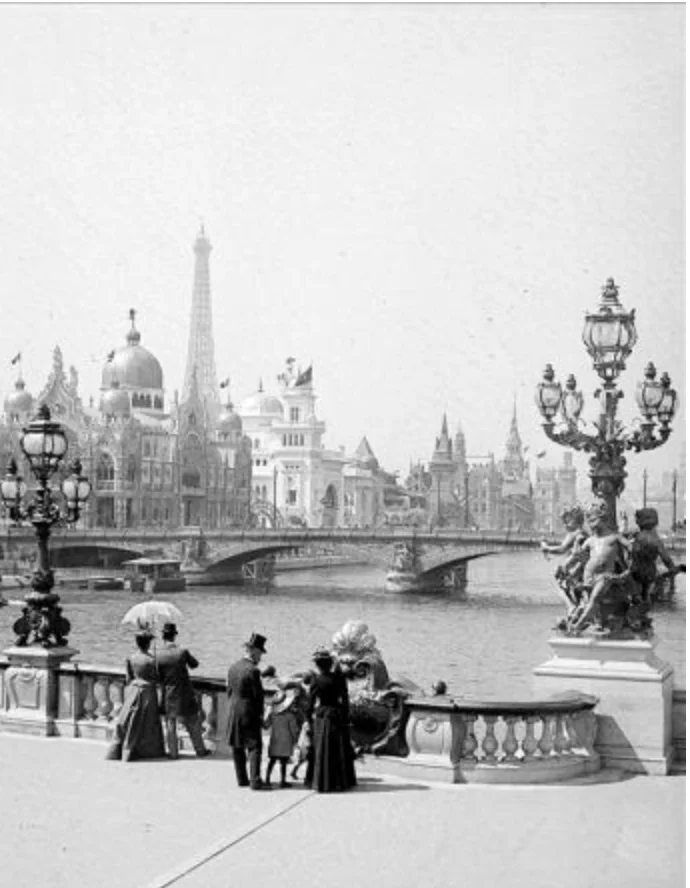
Larios first introduced me to the nineteenth-century flaneurs, men who wandered the streets of Paris in search of telling sights. They watched the city as it changed, attending to objects and encounters that seemed to capture its modern life. Their method depended on time and curiosity: instead of setting out to reach a particular destination, they let the place offer its details.
A few years ago, Larios led three “Art of the Flaneur” sessions for a group of writer friends. We were asked to walk, look around and keep a Drift Log. Each outing had a focus. We might search for apertures, whimsical objects, squares and lines, or things that glisten. These prompts gave a walk a light structure while leaving room for surprise. The aim wasn’t to collect impressive sights. It was to practice noticing.

My favorite prompt was to look for signs of the past in present-day objects. A fire hydrant layered with peeling paint became a small record of time: one surface showing through another. That image connects to the idea of a palimpsest. The word originally referred to papyrus scrolls scraped down and reused. Traces of the earlier writing could remain beneath the newer text, like a ghost that hadn’t quite disappeared. Now the term can describe the way older histories show through ordinary things around us. I sometimes wonder whether wrinkles count.
This kind of looking asks for patience, but it doesn’t require a grand setting. A worn surface, a repaired object or a familiar corner can carry signs of what came before. The observer’s task is to stay with the detail long enough to see that it isn’t merely background. A Drift Log gives those impressions somewhere to land. Later, details that seemed unrelated may begin to speak to one another.
Listening for the stories around us
Larios also encouraged us to listen in on fragments of conversation. At Divas, a coffee shop near my home, I overheard a couple on what seemed to be their first date after meeting through a computer match. Their exchange offered the start of a story, though another customer nearby soon caught my attention by talking excitedly about trying to break into the film business. The moment was ordinary and unfinished. That’s part of its appeal: a writer can notice the scene without pretending to know what happened before or after.
Listening this way isn’t the same as possessing someone else’s story. What a passerby hears is partial: a phrase, a tone, the setting around it. For writing, that incompleteness can be useful. It leaves space for questions and reminds us how much of any encounter remains outside our view. A note in a Drift Log can preserve the detail that struck us without claiming the whole truth of a stranger’s life.
Reading more about the Parisian flaneurs, I learned that some walked pet turtles on leashes to slow their pace as they wandered through the arcades. The image is funny, but the purpose makes sense. Slowing down can help a person register what speed tends to erase. I don’t have a turtle, though the thought of one setting the pace is appealing.
From observation to meaning
Careful observation gives writing its raw material. A glint, a worn layer of paint, a half-heard remark: each can become the start of a metaphor or scene. I think of this as writing at the level of mitosis, where one small element seems to divide into possibilities. The detail alone may not explain anything. Its power comes from the associations it invites and the relationships it may form with other details.
Larios suggested that patterns can emerge from a collection of observations, and that those patterns may point toward Meaning with a capital “M”. The process is less like finding a message already printed on the world than sorting through a mixed handful of impressions. Writing brings choices: which details belong together, which image keeps returning, and what kind of order might make their connection visible. Life can feel random and amoebic; the page gives a writer a place to test the shapes hidden within that disorder.
For me, flaneur-style wandering has two lasting effects. The first is a different experience of slowing down. When I usually slow my pace, my attention tends to drift away. This practice asks me to drift toward the world instead, watching closely as I go.
The second is the growing conviction that the outside world is full of story. Many of my stories have come from inward driftings, so it’s eye-opening to find how much inspiration waits in streets, shops and overlooked objects. A walk doesn’t promise a finished idea. It does offer a steady supply of particulars, and particulars give a writer something real to work with.
That may be reason enough to try a Drift Log: walk with a question, record what catches your attention, and leave the observations unresolved for a while. Meaning may emerge later, or a single detail may prove enough. I just might get a turtle.