Joel A. Sutherland’s Haunted Canada Graphic Novel Returns with Four Chilling Tales
Story by Unknown · 507 readers
Four Canadian ghost stories bring history, eerie art and just enough fright for readers ages 9–12.

Four ghost stories rooted in Canadian places and the past give Haunted Canada Graphic Novel, Volume 3: Four Chilling Tales its appeal: each begins with an unsettling history, then follows its echoes into the present. Written by Joel A. Sutherland and illustrated by Sara Harding, Maya McKibbin, Jackie Reynolds and Josh Rosen, the 144-page book is scheduled for September 2026 from Scholastic Canada for readers ages 9–12.
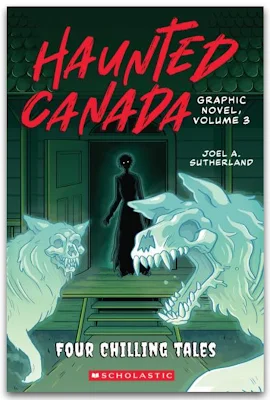
The series’ mix of local lore and supernatural suspense makes this volume a seasonal pick, though its stories aren’t limited to Halloween. Sutherland adapts four tales set in Moncton, Quebec, Bell Island and Saskatchewan. Their settings and time periods give the collection variety, while the illustrations let each story establish its own visual mood. The reviewer finds the ghosts frightening without making the book too intense for its intended age group.
A curse reaches into the present
Sara Harding illustrates “Rebecca’s Concrete Grave,” which begins in Moncton in 1876. Rebecca helps save her family’s farm after drought and fire devastate the community. Rather than earn gratitude, her actions lead to her being branded a witch. After she is hanged and buried in a grave filled with concrete, the surrounding area is said to carry a curse.
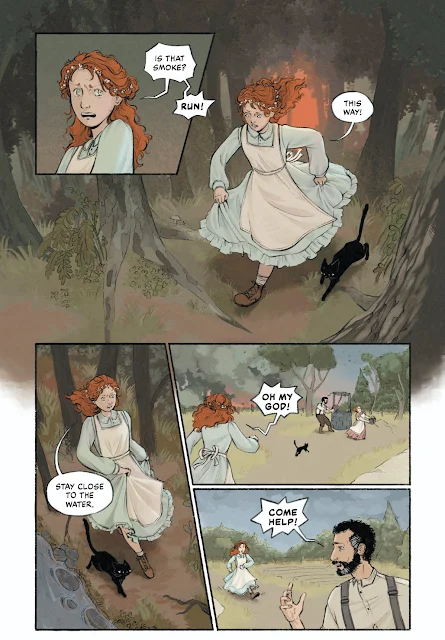
The story then jumps to contemporary teens, whose prank against a fellow student brings Rebecca back into the picture. That shift lets the tale connect an old injustice with present-day cruelty, while Harding’s artwork moves between the two periods. The review singles out her depiction of Rebecca as especially frightening, and the episode sets the collection’s pattern: a piece of local history becomes a source of unease for people living generations later.
The premise also gives the opening story a clear emotional hook. Rebecca’s return is tied to betrayal, so the haunting has a human grievance at its centre. Readers who enjoy ghost stories with a historical setting and a direct line to current characters will find a strong entry point here.
Ghost hunters enter a former boys’ home
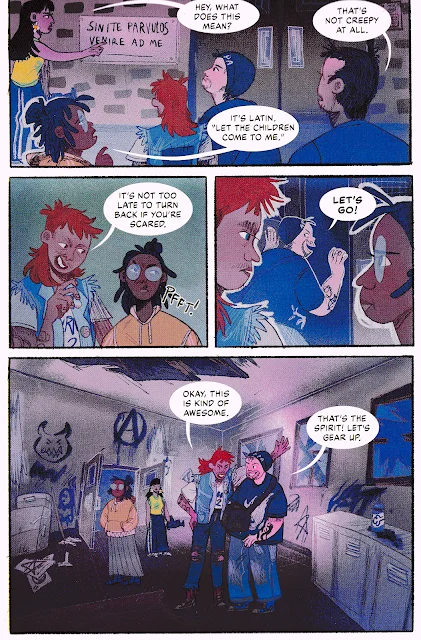
Maya McKibbin’s “Nighttime in the Asylum” starts in Sainte-Clotilde-de-Horton, Quebec, in 1959. Three boys living in a home sneak downstairs to open a stolen Christmas gift. A voice urges one of them to use a lighter and burn the place down. Nearly sixty years later, the building has been used as an asylum and has since been bought by a couple who hope to attract ghost hunters.
The ghosts remain, and their message has not changed. McKibbin’s contribution includes eccentric ghost hunters, vivid yellow-green specters and the striking eyes of people affected by them. The reviewer describes the art as electric and mesmerizing, giving the episode a different visual energy from Harding’s historical haunting.
The shift across decades makes the building itself feel like the story’s constant: its uses change, but the threat lingers. The ghost hunters’ presence also adds a wry element to the setup, pairing people drawn to the paranormal with spirits who have a far more alarming purpose. It’s a compact blend of atmosphere and dark humor within the book’s wider collection of regional tales.
A mining community’s uneasy sighting
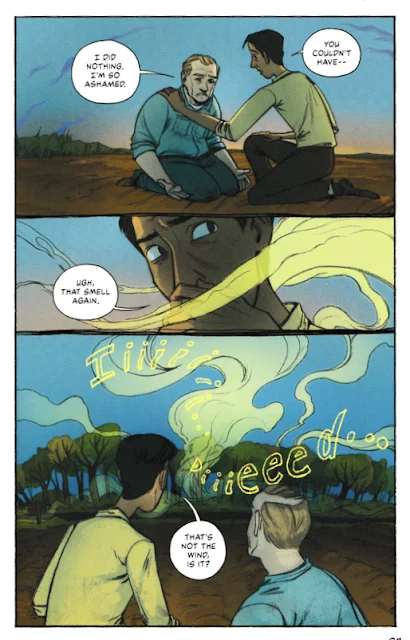
“The Swamp Hag,” illustrated by Jackie Reynolds, moves to Bell Island, Newfoundland and Labrador, in 1943. Miner Clancy is coping with his daughter’s disappearance. Since miners already believe their workplace is haunted, some are prepared to accept his claim that he has seen her there. The story’s next turn comes when two other miners, Nate and Walt, head to their fields and Walt admits that he has witnessed something he has kept to himself.
The review reveals little more about what Walt saw, leaving the central mystery intact. That restraint suits a story built on what people in a close community fear or choose not to say. Its mining setting gives the haunting a distinct atmosphere, while the disappearance at its centre adds a family loss to the collection’s mix of curses, restless spirits and ghostly warnings.
Campfire stories bring the collection together
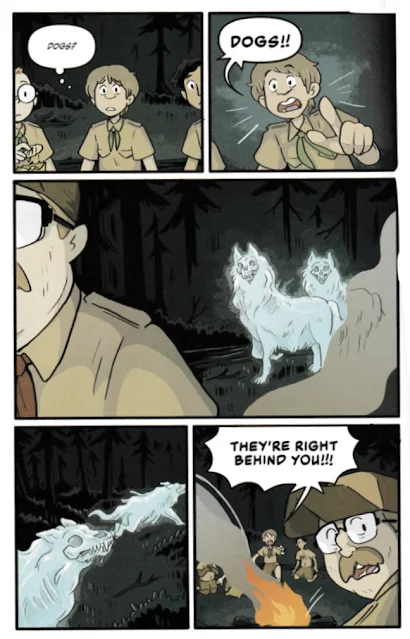
Josh Rosen illustrates “The Haunted Camp,” set at Camp Gilwell in Lebret, Saskatchewan. A scout leader entertains the young campers with frightening tales, but some of the boys remain unconvinced. His story about a creepy nearby house begins to change their minds.
The house once belonged to a doctor who cared for people with tuberculosis. When the doctor’s wife fell ill, she asked him to look after her beloved dogs, Archie and Bailey. He remarried after her death and later died himself; the first wife’s ghost still haunts the house, searching for the dogs.
Rosen balances playful characterization with menace. The boys are curious, bold and anxious, while their slightly goofy leader is willing to investigate the house himself. The ghosts of Helena, the doctor’s first wife, and her dogs bring the sharper fright. The reviewer sees this balance as well judged for young readers: spooky enough to make an impression, without leaving children too unsettled at bedtime.
The campfire frame also gathers the volume’s interests in storytelling and belief. The boys hear a tale before deciding whether to accept it, much like readers considering Sutherland’s invitation in the preface: “The following stories are inspired by true events. That’s right, true. You can choose to believe...or not. The ghosts don’t mind either way.” That tease captures the book’s central pleasure. These are illustrated ghost stories tied to Canadian places, with enough historical texture to invite curiosity and enough playful restraint to suit readers ages 9–12.
Haunted Canada Graphic Novel, Volume 3: Four Chilling Tales is due from Scholastic Canada in September 2026. Its four illustrators give each haunting a distinct look, while Sutherland’s stories keep returning to the same unnerving possibility: that the past may not stay put.