Three Middle Grade Gift Picks: Mo Farah, Spooky Waldo Puzzles and an Advent Calendar
Story by Greg Pattridge · 540 readers
A biography, Halloween spot-the-difference puzzles and a daily Waldo activity calendar offer engaging choices for middle grade readers.

For children aged 6 to 10 who want an inviting read or activity without taking on a long novel, these three picks offer different ways into a book: a true story told for young readers, hands-on visual puzzles and a daily search-and-find calendar. Each could suit a different kind of reader, and the two Waldo titles put play at the center of the experience.

Mo Farah: a life story for young readers
Mo Farah – The Boy Who Ran to Be Free is an 85-page illustrated book and the second title in the Muslim Mavericks series. Dr. Seema Yasmin’s earlier book in the series, Maysoon Zayid, the Girl Who Can Can, introduced another subject whose story may encourage young readers to look beyond familiar biographies.
This book follows Farah’s early life and the difficult circumstances that took him from his family home in Somaliland to England when he was nine. He was born Hussein Abdi Kahin and was given the name Mo Farah. The account describes a child facing considerable challenges, and the caring adults who helped him find the courage to seek a connection with his family and learn about the boy whose name he had been given.
That makes the book more than a story about athletic achievement. Farah became one of the most celebrated distance runners of all time and won four Olympic gold medals, but the biography also attends to identity, family and the search for belonging. Its accessible length and illustrations make it a possible fit for readers drawn to real lives, sport or stories of perseverance. The publisher’s page for Mo Farah offers further details, and Farah’s website provides another place to learn about him.
Yasmin brings a wide range of experience to her work as an author. She is a Pulitzer Prize finalist, Emmy Award-winning journalist, medical doctor, professor, poet and writer of five books. Her titles include Muslim Women Are Everything, Viral BS: Medical Myths and Why We Fall for Them and the poetry collection If God Is a Virus. She trained in medicine at the University of Cambridge and journalism at the University of Toronto. Her work spans medicine, journalism and teaching, a mix of fields that informs her nonfiction for young readers.
Waldo puzzles with a Halloween twist
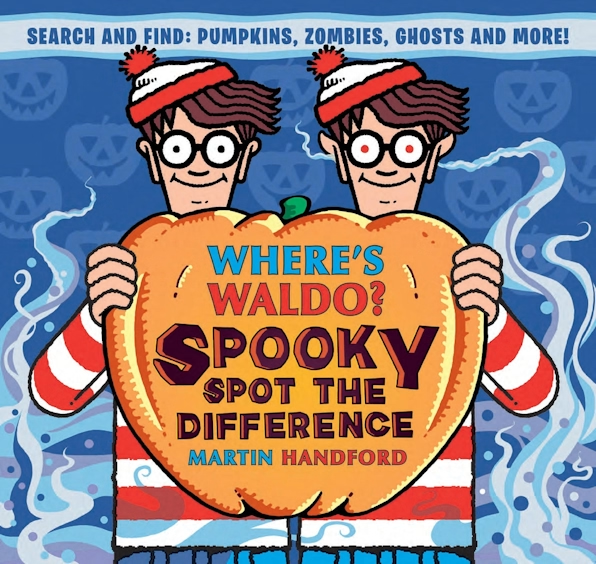
Where’s Waldo? Spooky Spot the Difference takes Waldo and his friends into a Halloween adventure built around visual challenges. The puzzles invite readers to study busy scenes, compare details and return to the page when an answer isn’t immediately obvious. The activities vary: some ask readers to spot differences across four magical lands, while another challenge involves finding 15 differences in pirates’ hats.
That variety gives the book room to work as a shared activity as well as a solo one. Readers can take turns searching, compare what they notice and move between puzzles at their own pace. It may particularly appeal to children who enjoy pictures, close observation and a challenge that doesn’t depend on reading a long stretch of text. The publisher’s page for Where’s Waldo? Spooky Spot the Difference has more information about the book.
A Waldo activity for each day of December
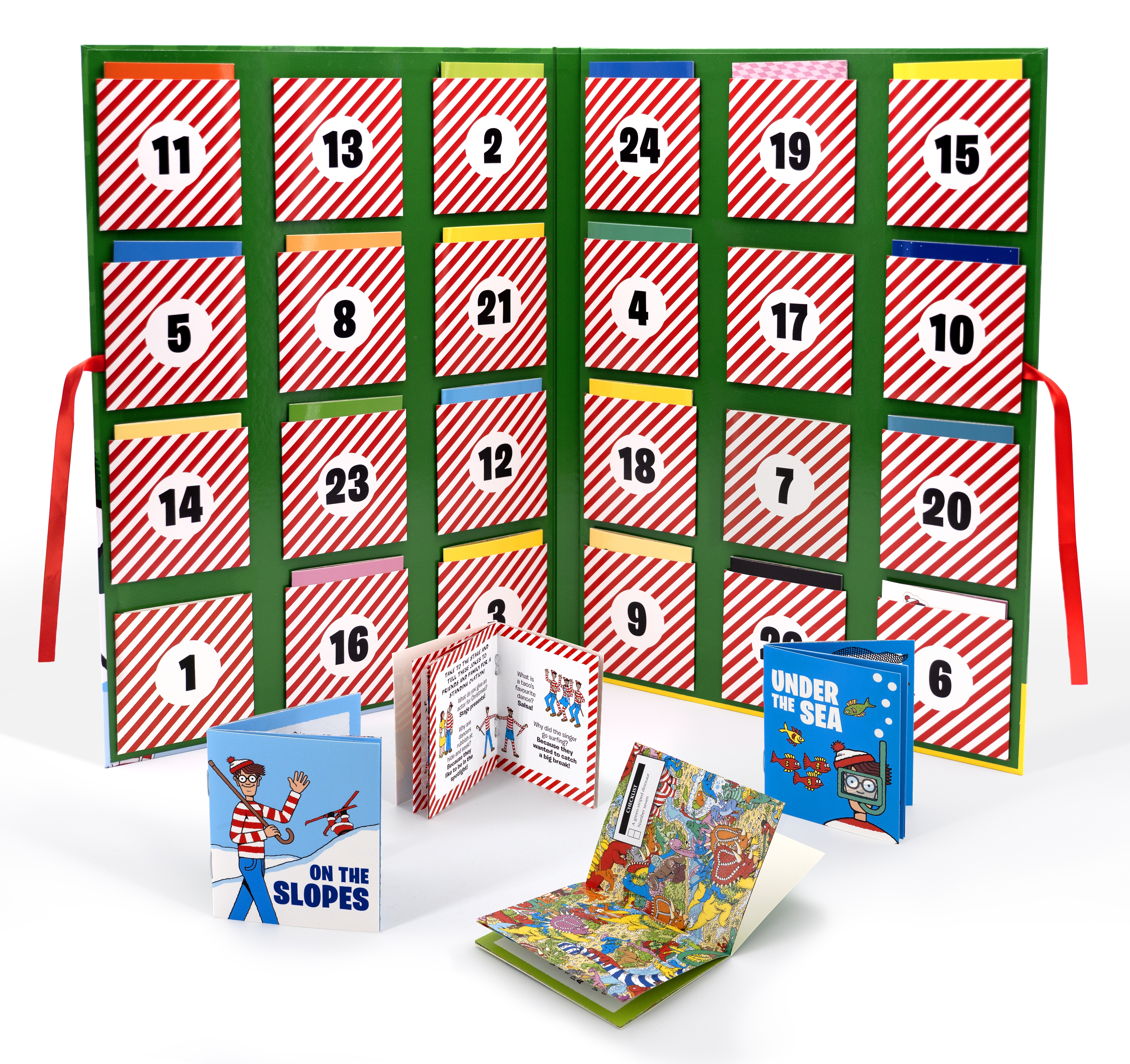
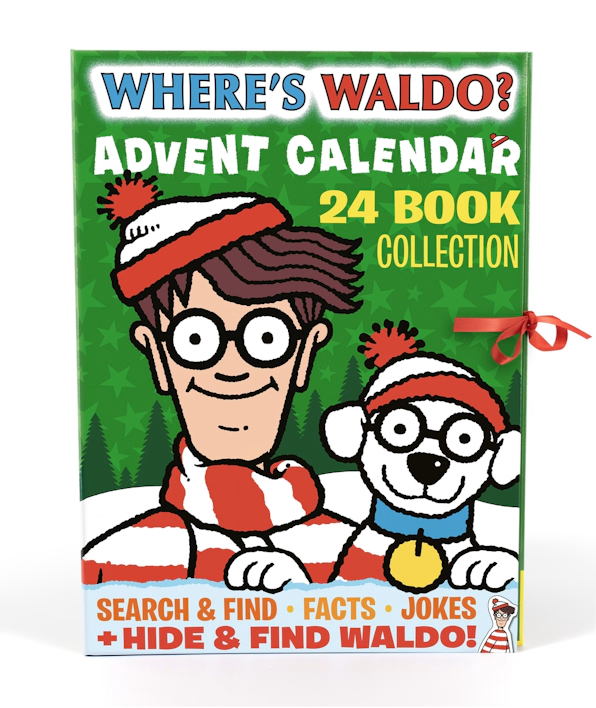
The Where’s Waldo Advent Calendar spreads its activities across the days leading up to Christmas. Each day brings a mini-book with search-and-find activities, jokes and facts, giving children a small discovery to open and enjoy. On Christmas Eve, readers can press out and assemble a Waldo figure, then hide it for friends or family to find.
The daily format offers a simple structure for a seasonal routine: open a new booklet, explore its contents and leave the rest for another day. It also gives families a screen-free activity to share, while children can work through the puzzles independently. Because the calendar contains multiple mini-books, its contents may be revisited after the holiday season, making it a gift that could return to the bookshelf for future searches.
Martin Handford, the creator of Waldo, has long been interested in crowds and the patterns, details and humor within them. He began drawing as a child, studied art and later worked as a freelance illustrator specializing in crowd scenes. Films, museums, galleries, comics, books and collected ephemera all contribute to his visual inspiration. That attention to small details is a natural match for search-and-find activities: the pleasure comes from looking carefully, noticing something others might miss and finding the character tucked into a lively scene.
These three choices answer different gift-giving needs. Yasmin’s biography offers a substantial true story in a manageable format; the Halloween book turns close looking into a playful challenge; and the Advent Calendar parcels activities into brief daily sessions. For young readers who prefer discovery and interaction to a long novel, each offers a distinct reason to spend time with a book.

Readers and writers can also find more middle grade recommendations, reviews, interviews and writing tips through past Marvelous Middle Grade Monday posts. The collection brings together contributions from other bloggers, extending the search for books that will keep young readers curious.
Share on Facebook (Opens in new window)Facebook · Share on Tumblr (Opens in new window)Tumblr · Share on X (Opens in new window)X · More · Email a link to a friend (Opens in new window)Email · Print (Opens in new window)Print